Tanker Markets
10/10Critical
Hormuz crisis is imposing maximum operational and commercial pressure on crude, product, and LNG tanker trades.
WEEKLY REPORT · 2026-W22 · May 25 – May 31, 2026
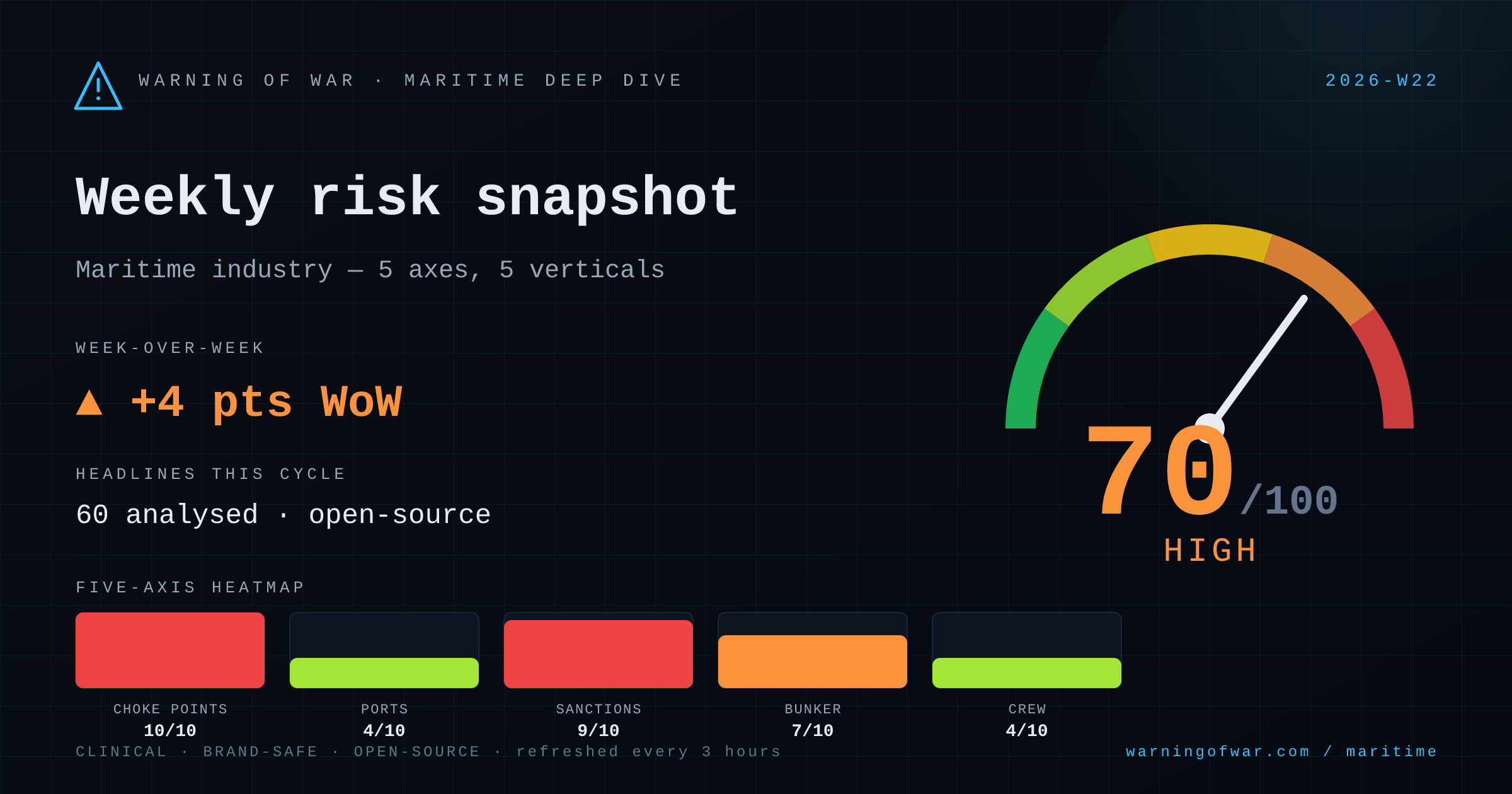
Weekly maritime industry risk snapshot — composite 70/100 (High), ◆ first weekly snapshot.
The Strait of Hormuz has entered a period of severe commercial disruption. U.S. Treasury has sanctioned Iran's Persian Gulf Strait Authority (PGSA), and multiple U.S. military strikes on Iranian military infrastructure near Hormuz have followed IRGC interdiction of commercial vessels, including a documented halt of a U.S.-flagged tanker. Flexport and ICIS confirm Hormuz transit remains severely disrupted, with at least three oil and LNG tankers exiting with AIS transponders off. Oil prices have surged materially. The shadow-fleet sanctions landscape is tightening, with GMS receiving U.S. approval to recycle sanctioned container tonnage. Rotterdam's first ethanol bunkering and PIL's inaugural Shanghai LNG bunkering trial mark incremental alternative-fuel milestones.
Each axis scored 1–10 from open-source signals. The composite at the top is a weighted blend.
Critical
Hormuz crisis is imposing maximum operational and commercial pressure on crude, product, and LNG tanker trades.
Elevated
Dry-bulk markets face secondary freight-rate and routing pressure from Hormuz disruption and consolidation activity.
High
Container operators face Hormuz rerouting costs, schedule reliability degradation, and sanctions exposure from shadow-fleet scrapping.
High
Offshore sector sees elevated OSV and FPSO risk premiums in the Arabian Gulf while offshore-wind investment signals remain constructive.
Elevated
Superyacht and cruise operations are indirectly pressured by elevated fuel costs and Middle East routing uncertainty.
No named disruption events reported in this cycle.
Outlook pending.
← All weekly reports · Methodology →
Important: Warning of War provides AI-generated risk intelligence from public open-source data. Output is informational only — not investment advice, official assessment, or operational guidance. Always consult primary sources and qualified analysts before any commercial decision.